Growth and Going Home

As I complete my semester in Berlin, it is time to reflect on my time here. In my first blog post after arriving, I outlined three goals I had for my time in Berlin. These goals were

  1. Focusing on my schoolwork even in my new environment
  2. Improving my German-language skills and my confidence in speaking German
  3. Develop friendships in my classes and at my service learning site

I think that I at least partially met all of these goals, although I had more trouble with some than with others. I did not struggle too much with completing my classwork due to my new environment, and I feel that I did well in all of my classes. I also feel more comfortable speaking German. I am able to talk to people when they ask me questions, and I feel comfortable carrying out full conversations. The things that helped me most with this goal were my service learning site and my host family, who encouraged me to speak German even when I was unsure. I did struggle with developing friendships, although in the past several weeks I have become closer with my classmates. If I could go back in time, I think I would tell my past self to go out with some of the other people in my program at the beginning of the semester. I didn’t go out with them originally because I don’t drink and I get anxious in crowded places, but I think that if I had spent more time with them at the beginning of the semester, it would have been easier for me to form stronger friendships with them. In addition, I had trouble with my mental health during the past semester because I do not have as strong of a support system in Berlin, and I think it would have been easier to handle if I had developed stronger friendships with the other students in my program. On the other hand, this also encouraged me to be more independent. In Berlin I was more likely to explore the city on my own, rather than trying to make plans with other people, and I think this enhanced my experience. I look forward to being more independent once I return to the United States and Tulane.

While in Berlin I think I have gained a better understanding of the divisions and different attitudes within Germany. For example, when we learn about the Cold War in the United States, even from a German perspective, it is usually from a western perspective, and doesn’t reflect the impact on East Germans. During this semester, however, I have learned that often West Germans don’t feel very impacted by reunification, because it did not change their lives much. On the other hand, East Germans have often expressed nostalgia for their childhoods, even though the East is often portrayed negatively. For many East Germans, they feel as though their homeland has been lost, because current Germany is just like West Germany, and everything changed for East Germans. I have taken classes in politics and anthropology, and I think that all of these classes have given me a better understanding of German perspectives, which I look forward to applying in my future coursework.

I thought that some parts of the Paige reading were interesting, particularly the “Strategies for Long-Term Maintenance of Language and Culture Learning” (160-162). As a German and International Relations major, I have plans to continue learning German and involving myself in intercultural communication through the rest of my time at Tulane and after I graduate. I am very involved in the German department at Tulane, as well as the German Club, and I look forward to being able to share my experiences with others, as well as to continue embracing German culture at Tulane. One of the suggestions was to stay updated with news sources from the host country after returning (Paige 161). I think this will be something I try to do, as it will help me to continue learning concrete things about German and European current events as well as continuing to practice my German language skills. In addition, while I did not have the opportunity to connect with German students, I plan to stay in touch with the other students in my program, who all have an interest in German language and culture. I have also met with a native German who works in the US Department of State while in Berlin, and I look forward to staying in contact with her even after I return to the United States.

For my service learning site, I developed a flyer for my program provider to distribute to future students. At the beginning of my semester, one of the staff members sent out some volunteer opportunities, but I was not particularly interested in the ones she had provided. When I went to speak to her, she told me about Moabit Hilft, and got me into contact with the organization. I created this flyer so that it could be included in an email sent out to future IES Berlin students at the beginning of future semesters. In addition to information about volunteering, I also included some information about my personal experience. I think it is useful to have a personal perspective so that future students will feel more connected. I also included information about donating clothes. I know that a lot of my fellow students spent most of their free time traveling and were not interested in spending that time volunteering, so I was thinking about alternate ways to encourage future interaction between IES Berlin students and Moabit Hilft. Also, I know that a lot of students are concerned about being able to pack to go home, and I thought that giving them a place to donate clothes would help solve both of these issues.

Works Cited

Paige, R. Michael. “Preparing to Return Home” in Maximizing Study Abroad. 143-164.

Identity and Interaction

At my service learning site, there is a meal made for the volunteers every couple of weeks. Each person pays two euros, and then some of the volunteers help to cook the food, which everyone eats together around a table in the middle of the afternoon. The last time I was at my site, I joined in with this meal, eating with my fellow volunteers and helping in the kitchen.

One of the interesting things about the culture at my service learning site is that there are people from everywhere, so it is not typically representative of German culture. The volunteers come from Germany, Turkey, Syria, France, Brazil, and many other places around the world. I felt as though the meal was not a typical German experience, based on the meals I have shared with my host family. When I eat with my host family, we often only talk to each other to ask for more food, and occasionally some small talk. However, the meal with my service learning colleagues was a much more open experience. Everyone talks to each other, and there are often several conversations happening at a time. Even though there are often people around me talking only to each other, it was difficult to feel like an outsider. Sometimes, people would speak in Arabic or Persian, and I would not understand what they were saying. However, even when it was impossible to understand the actual words, they would still make it clear when they were making a joke, and sometimes would even translate it into English or German.

Another interesting thing I noticed was how relaxed everyone was. Even though it was a break from work, and we all knew we would have to return to work shortly, it did not feel like anyone was rushed. Everyone took the time to relax and interact with each other, as well as making sure everyone was served multiple helpings of food, and that no one was hungry. This was interesting for me to observe, because I don’t often see meals as times for socializing. Usually, I approach meals as tasks that I need to complete as quickly as possible, in between other things I have scheduled. As a result, this was a very different approach to meal times than I am used to. I think this is something I would like to implement in my own life, particularly when sharing meals with my friends once I return from Berlin.

One thing I have noticed during the weeks I spent at my service learning site is that I am more willing to speak German, even if I am not sure of the right thing to say. Many of the volunteers do not speak English, and I also occasionally had to interact with local residents who were coming to make donations. At the beginning, I would often avoid speaking if I had to speak German, but as I spent more time there, I began to speak German instead of English, even when I was unsure.

I spoke to different people about their impressions of the United States. First, I had a conversation with a few of my colleagues at the service learning site. This was interesting, because most of them do not know much about the United States other than politics. With my service learning site being an organization that primarily assists refugees and other socioeconomically disadvantaged people in Berlin, and most of my colleagues being refugees or immigrants themselves, my colleagues were naturally opposed to American politics. They were generally indirect about their opinions, even though the opinions were still clear. For example, several of my colleagues have made jokes about me being a refugee from the United States when they find out I am American. Even though they did not say it, it is obvious that they made those jokes because they disagree with the current American political climate. Their other frame of reference for the United States is through the media. In Germany, American television shows are very popular. However, this doesn’t translate into much knowledge about what the United States is actually like. For example, they were only aware of California and New York City, so it was difficult to explain where I am from with only those two places.

I think my relationship with my colleagues is interesting when observed through the lens of the Gordon reading. Gordon discussed how, particularly in developing nations, travelers have more power over the locals (52). I think this is interesting to examine. Although I often feel like I have less power with Germans, because I have less knowledge of the language and culture, this is not necessarily the same in my service learning site. While the other volunteers are generally more comfortable living and working in Germany than I am, I also find that I and the other white volunteers are more often approached my locals bringing donations. The locals assume that I am more likely to speak German than my colleagues, even though many of them are much more comfortable speaking German than I am. Everyone tries to equalize the relationships between everyone at the site, which we do through the language cafes and shared meals, and I feel like we are all equal as workers, but sometimes that is not the case when people from outside would come into the site.

One of the most interesting conversations I had was with one of my colleagues about our different school systems. He was surprised by how many different schools I had gone to in my life. For me, it was normal to only go to one school for two to four years, before going to another one. However, in Germany, most people only go to two different schools, and they both are for about six years. He thought it was interesting, because he had gone to many different schools, but it was because he often got in trouble in school, rather than because they were only for a few grades.

In addition to speaking with my service learning colleagues, I also spoke to my host mother. Occasionally we will share a cup of tea together in the afternoon, so I took one of these opportunities to ask her about her perspective on the United States. Like my service learning colleagues, she also mostly knew about the United States through politics. She talked to me about the impeachment process and the future government of the United States. When I mentioned that a lot of people in 2016 refused to vote because they didn’t think anyone was a perfect candidate, she was very surprised. In Germany, there are several large parties, and the Chancellor is the head of the party with the largest share of the Parliament. This means that there are more options to vote for, but it also means that the head of government will definitely have the support of the majority of the population. She also said she thought it was weird how much money and time is spent on elections in the United States. In Germany, campaigns will only begin shortly before the election, but in the United States, many candidates will campaign for several years.

In addition to politics, we also spoke about free time activities. In particular, my host mother was surprised that I had spent every summer at summer camps. For me growing up, this was normal, because my parents worked, and many of my friends would also go to different summer camps. However, in Germany summer camps are not so popular. They are usually only run by organizations for low-income families, or occasionally for members of Scouts organizations. In addition, in Germany, workers get more vacation days, and summer vacations are about a month shorter than in the US, so it is easier for parents to be at home with their children in the summer.

Despite some of the differences I learned about through these interviews, I believe that the situations Gordon discussed regarding exploitation of or by visitors are not necessarily my experience in Berlin. Both Germany and the United States are prosperous nations with similar demographics, so I am do not generally have more power due to my status as an outsider.

Sources:

Gordon, Robert. „To See Ourselves”, “Travelling Rituals” In Going Abroad: Travelling Like an Anthropologist. Chpts 3, Chpt 4. 128-152.

Communication and Culture

During my time in Berlin, I have had the chance to visit many museums and monuments. A few weeks ago, I went with my host mother to the Gropius Bau museum. I really enjoyed this museum experience, because many of the other museums I had been to were through my program and with my classes. At those times, I was in a large group of other students, and everyone I was with was American. My experiences at museums mostly reflected Gmelch’s observations. For example, he mentioned a student wondering if they even enjoyed the museums they had visited (Gmelch 77). I have experienced that same thought. When I had gone with classes, I always felt pressured to read the English and move on as quickly as possible. In the beginning of October, I went on a trip with my program to Vienna for a week. While I enjoyed the trip, I also felt that we were all in a race with each other to visit as many museums as possible. By the end of the week, I couldn’t make myself go to anymore museums, even though there were more museums I had wanted to see. I had spent the past four days going to at least two museums a day. On the other hand, I felt that going with just my host mother to the museum in Berlin allowed me to take more time to actually appreciate the museum. In addition, almost all of the museums in Berlin have descriptions in English as well as German. By going with a German, I felt more encouraged to take the time to read the descriptions in German, and then only in English if I was confused.

The Gropius Bau had a few different temporary exhibits when I went. The one my host mother was interested in was the Garden of Earthly Delights, which had different installations inspired by nature from around the world. I really enjoyed this exhibit, but the work that impacted me the most was in the Walking Through Walls Exhibit. This year is the 30th anniversary of the Fall of the Berlin Wall, so a lot of things in Berlin have been influenced by that. The exhibit featured artists from around the world whose works were influenced by borders between people and places that have been constructed around the world. My favorite piece from this exhibit was actually a video, titled Mother’s Day, by Israeli artist Smadar Dreyfus. The video I found online was from a different museum, but the installation was set up in the same way in the Gropius Bau, and the video was also the same. The video focuses on Syrian Druze students from Israel, whose families were cut off from Syria by the ceasefire line. In the early 2000s, these students were allowed to study at university in Syria. On this day, Mother’s Day, they were not allowed to return to see their mothers, so they set up a system with megaphones so that the students could speak to their mothers across the border.

For me, this was very emotional, especially after having been in Berlin for a few months. One of the hardest things for me to adjust to was not being near my friends and family. Although I am able to use a cell phone and the internet to communicate with them, it is still difficult, and not the same as being able to see them in person. Even at Tulane, I am far from my family, but being in Berlin has had a very different impact on me emotionally. I do not think my response to the video would have been the same if I had seen it while in New Orleans.

In addition, I think my service learning site has impacted my emotions about families and friends being separated. Most of the people I work with and help are refugees, who have had to leave their homes and families. Although many of them do not want to speak about their experiences, we have talked a bit about being newcomers to Berlin, and having to adjust to the new culture. Their stories and experiences are more similar to the stories shown in Mother’s Day than my own, but I think that everyone can feel the same way about being separated from their family, even if the reasons for that separation are different.

I have also had the opportunity to visit many monuments in Berlin. For one of my classes, which focuses on memory politics, we have visited different monuments almost every week to connect to what we have learned in class. However, on Saturday, I went by myself to visit the Brandenburger Tor. I didn’t know much about it beforehand, only that it was connected to the division of Berlin, and it is a very popular destination for tourists. Saturday was the 30th anniversary of when the Wall first fell, so there was a concert held at the Gate to celebrate reunification. I looked up the significance of the Gate before I went, and learned that it was one of the border crossings between East and West Berlin after World War II, before it was closed when the Wall was built. In addition, the beginning of reunification was signified by the West German chancellor walking through the Gate to meet the East German prime minister. As a result, the Gate today is a symbol of the peaceful reunification.

Brandenburger Tor

While I was at the Gate, I spoke to the locals more about their thoughts and reflections on reunification in general, but obviously the Gate is a symbol of a reunification for many in Berlin. Because I went to a concert, I had the advantage of having a lot of people around to speak to, however, many of the attendees were not from Germany or Berlin. For example, my host family did not go to any of the events celebrating the anniversary, and I know many of my friends host families did not attend either. However, while I was waiting in line to enter the concert, I had the chance to speak to a family from Berlin. The son was about my age, so he had no experience with the Wall, and was born after it fell. The mother was in Berlin when the Wall fell, and she said it was important for her to go to the Gate to celebrate the anniversary, because the Fall of the Wall was such an important event for her, and for Berlin. She also saw the Gate as a symbol for the new, reunified Berlin.

the stage of the Mauerfall Konzert

Culture and Communication

During the past several weeks, I have had some time to adjust more to the classroom setting at IES Berlin. One of the classroom features I have had trouble adjusting to is how little structure there is. In a traditional German university course, the final grade is based entirely on a final paper or exam. However, because IES is an American institution, it also attempts to have similar requirements to American university courses. This means that, in my classes I also have presentations, midterm exams, and essays, in addition to the final exam. However, this is still much less structured than my courses at Tulane. At Tulane, I am used to being able to keep track of my progress through the semester, through homework assignments, quizzes, or graded summaries of the readings. It has been difficult for me to adjust to not having these smaller assignments throughout the semester, and it is more difficult to know how I might do on exams, because I have no sense of how much I am really understanding the course material. In addition, most of my classes meet only once a week, which makes it harder to settle in to them, because we meet so infrequently.

Despite being an American institution, most professors are German professors. One thing I have noticed is that the professors interactions with the students are very casual. All of the professors are addressed by their first names, and both professors and students use the informal you when speaking to each other in German. I am not sure if this is how traditional German universities work, but it is definitely different from my experience in the United States. At Tulane, even if I am very close with a professor, I will still address them more formally, and using their last name. It has been interesting to observe, because my instinct is to act more formally with my professors.

Media, especially news, is very prevalent in Berlin. On public transportation, there are screens which show important news stories, advertisements, and promotions for new books and movies. I really enjoy this, because it is easy to take note of several important things while I am traveling to and from class every day. In this format, I also find that advertisements are less disruptive to the content than commercials are in the United States. There are not breaks for commercials on the public transportation broadcasts, and they are just pictures that stay up for a few seconds. On actual television and radio programs, there are more commercials that is more consistent with American commercials. While watching a movie on a German channel, for example, there were several commercial breaks, which advertised things such as food products, stores, and other programs on the channel. It was interesting to see how the commercials were similar to American commercials, even though the products being advertised were different.

Usually, my host mother will listen to a radio news broadcast while she is making her dinner. Most of the channels that broadcast news on both television and radio in Germany are state-owned, which makes them more similar to American channels like NPR and PBS, rather than the more popular American news channels, which are privately owned. This means that the news broadcasts are more in line with the government’s political beliefs. This was very evident in some of the reports from when I first came to Berlin, which was shortly after a local election in which the AfD, a far-right party, won more seats. The radio broadcasts were not in support of the AfD gaining more power, because the government leadership is not part of the AfD. However, most of the broadcast also focuses on reports about the traffic and weather, which are more objective.

At my service learning site, I have had some trouble adjusting to the community. It is a very casual environment, and the supervisors and other volunteers are very comfortable with each other. In addition, many of the volunteers are also people who have used or are still using the services provided by Moabit Hilft, so there is very little divide between the volunteers and the people coming to seek services. I thought that the Zull reading was very applicable to my experience in my service learning site. Zull mentioned that study abroad would require a reevaluation of your memories and instincts, and an effort to act differently than you normally would in your host country (Zull 181-182). I have definitely struggled with this, particularly the ways I communicate with people. In the United States, I am generally a quiet person. This is not something that I have been able to change easily during my time in Berlin. However, I have noticed that there is a negative impact on how I interact with the other people volunteering at my service learning site. Because the environment is so casual, many of them are comfortable communicating with each other, and some of them find me rude for not speaking as much with them, and being more quiet. I think this can also be linked to Paige’s strategies for creating opportunities for speaking. While not all of the volunteers speak German, I can still apply some of the strategies, such as gathering the courage to speak to strangers (Paige 211) to speak to the other volunteers in both English and German.

While I have had trouble adjusting to the site, it is a very welcoming place. Despite my struggles to feel like I am a part of the community, they were very welcoming to me when I arrived. In addition, they often welcome strangers. The purpose of Moabit Hilft is to provide assistance to people with navigating legal issues, and finding what they need in Berlin, such as clothing and housing. Mostly, these services are used by refugees, but they are also used by other immigrant groups, and even native Germans who are confused by the legal system are welcomed and given assistance. I think this definitely influences some of the cultural differences, because the site is built around the idea of assisting each other, which helps to build the community. In addition, the volunteers and people using the services come from all different places, so it is different than the Berlin culture I am adjusting to in my homestay and my neighborhood, where most people are from Berlin, or have lived there for many years. I hope that, as I spend more time working at Moabit Hilft, I will become more comfortable, and be able to learn more about the other volunteers.

Works Cited

Paige, R. Michael. ““Language Learning Styles and Strategies: Speaking to Communicate” in Maximizing Study Abroad. 203-224.

Zull, James E. “The Brain, Learning, and Study Abroad” in Student Learning Abroad. 162-187.

Settling In and Branching Out

Next Monday will be the beginning of my fourth week in Berlin, and, while I still think I need to adjust to the city more, I have been able to settle in. During the past three weeks, I have learned to navigate public transportation and grocery stores (and find peanut butter in the city– which is certainly not as common as it is in the United States), and started settling in to my class schedule. In order to help myself feel more comfortable navigating a new city and new experiences, I have tried to keep an open mind and use some strategies to take advantage of some of the resources available to me.

While doing the readings, I was very interested in Paige’s strategies for “Being a Visitor,” and “Making the Most of Homestays and Host Families” (Paige 84-89). In the few weeks I’ve been in Berlin so far, I have definitely found myself using my host family as a resource to improve my German skills and learn more about culture in Berlin. Although I was prepared for some differences in the living arrangements from the United States, I have still encountered some confusion, but luckily my host mother has always been very willing to explain differences, such as how the process for doing laundry is different. I specifically appreciated Paige’s advice to give the homestay some time. For the first week here, I struggled a lot with trying to figure out what my place in the home was, and trying to not get in the way of my host family. While these are still some things I struggle with on occasion, it definitely got easier as the days went on, and I am glad that I allowed myself the time to get used to the homestay a bit more.

In addition, throughout my time in Berlin, I would like to make use of Paige’s strategies for Making Friends and Keeping a Journal (Paige 78-80, 119-123). I think it will be important to my experience to develop friendships with Berliners, both to have a chance to improve my language skills, as well as to feel more comfortable in the city. In addition, I have often thought about keeping a journal, but am not able to continue doing so for very long. I look forward to implementing some of Paige’s strategies for alternative journaling throughout the next few months to see if I would be able to keep it up. Overall, I think all of Paige’s strategies were useful, even if I could not think of a way I would use them to improve my experience, because they all give ways to improve my intercultural understanding and think about what my interactions and experiences may mean to others.

I also think that Wagner’s description of an analytical notebook is very relevant to this blog. Wagner discussed the analytical notebook as a way to deal with culture shock when navigating a foreign country (Wagner 41). For me, I expect this blog will function similarly. I will be writing about my experiences with new and unexpected things, and trying to analyze how my experiences relate to the differences between society and culture in the United States and Germany. In addition, by focusing on my new experiences, I will also analyze my reaction to those experiences. Wagner says that the purpose of an analytical notebook is to question why you reacted to an experience the way you did (Wagner 46). I think that doing this will further allow me to adjust to cultural differences. I am also interested in seeing how my experiences will change while I am in Germany, and if my responses to certain events or cultural differences change over time, as my understanding of them changes. While I will not necessarily write about all of my experiences on this blog, I do hope to keep a journal, and see how my opinions change over time.

Living with a host family, I have been able to have many interactions with Germans. My host mother speaks to me in German most of the time, and it always makes me feel accomplished when I am able to understand what she is saying, as well as know the right way to respond to her. However, she is also very forgiving of mistakes I make with the language, and she is always willing to repeat herself in English to make sure that I have understood her. She seems really dedicated to helping me learn, and it has helped me to become more confident with my German language skills. On the other hand, a lot of Berliners I have interacted with, such as at grocery stores or restaurants, are less understanding of my mistakes. If they notice me struggling with my German they will automatically switch to English, and I cannot convince them to speak in German with me. This is frustrating sometimes, because it can feel like they have no confidence in my skills, and it also prevents me from practicing.

One of the most interesting language experiences has been with my service learning site. I connected with an organization called Moabit Hilft, which was founded a few years ago, and helps people navigate legal issues, learn English and German, and do anything else they may need to become settled in Berlin. When I first volunteered, it was really interesting, because the other volunteers all spoke different languages, with people speaking different levels of English, German, Arabic, French, and Persian. While it is sometimes difficult to communicate with each other because not everyone knows the same languages, it also led to some interesting conversations when we did try to communicate with each other.

Throughout my time in Berlin, I am excited to have the chance to work more with Moabit Hilft, and get to know the other volunteers, as well as the people who come to ask for help. On my first visit, I thought it was a very interesting environment, but I’m hoping that I am able to get more used to it as I spend more time there. The building was interesting because it was always very busy, and full of people interacting. For me, at first, this was very overwhelming, because there were a lot of people and a lot to do. However, for the other volunteers, even though there was a lot of work to be done, it was mostly a very happy and relaxed environment, and it really felt like a community. Even though I have only been there for a few hours so far, I already feel like the other volunteers are already accepting me as part of their community. I think this is very different to American attitudes towards community, where people must know each other for awhile and share similarities in order to form a community. As part of this community aspect, I was invited to eat dinner with the other volunteers. All of the volunteers sat at a table together to share a group meal that had been cooked by one of the other volunteers, and everyone spoke to each other while eating. I think that this feature of their schedule really encourages building a community, because it allows people to get to know each other and share in an experience. I think that as I spend more time working at Moabit Hilft, and sharing meals with them, I will get to know the other volunteers more, and that will help me to feel more like I am a part of their community.

As I continue to study in Berlin, I have tried to set a few goals that I hope to work to achieve during my time here. The first goal is academic; I want to make sure that I continue to focus on my schoolwork even while navigating a new environment. Second, I want to improve my language skills, and my confidence in my language skills. My hope is that, as I get more confident in my ability to speak German, fewer Berliners will try to speak to me in English, and I will be able to practice even more. Third, I want to develop friendships, both in my classes, as well as at my service learning site. I think that developing friendships will allow me to feel more comfortable in Berlin, and particularly friendships at my service learning site will allow me to practice my German more in different situations. As my time in Berlin continues, I hope to be able to adhere to these goals, as well as possibly find some new goals to achieve.

Works Cited

Paige, R. Michael. “Strategies for Social Relations” in Maximizing Study Abroad. 79-89, 113-123.

Wagner, Kenneth. “Antidotes to Culture Shock: The Analytical Notebook” 40-58.

My Berlin Itinerary

  • Housing
    • Heart of Gold Hostel
    • https://www.heartofgold-hostel.de/
    • Hostels are very popular in Germany, and very inexpensive to stay in. This hostel offers beds for as low as $12 per night per person, depending on the day and the room that is booked. It is very close to the IES Abroad Center in Berlin, as well as many other important sites in the city. In addition, it offers free wi-fi, as well as a traditional German breakfast for 5€ (about $5.50).
  • Frühstück (Breakfast) (8:00 – 8:30 am)
    • Traditionally, breakfast in Germany is a very light meal, often just bread, with meats, cheeses, or jam. The hostel my guests would be staying at includes breakfast for a very low price, starting at 8am. This makes it a good choice for my guests to have a quick and inexpensive breakfast before starting the day
Image result for german breakfast
breakfast
  • Berlin Wall Memorial (8:50 am – 10:50 am)
    • The memorial is about a 20 minute walk from the hostel. Visitors can do a self-guided tour of the grounds, so we would do the tour lasting about 120 minutes, which goes to 20 different stops that cover the history of the Wall, and is very in depth. The visitor center and viewing platform do not open until 10, but everything else opens at 8, so we could be able to explore most of the tour.
    • https://berliner-mauer.mobi/touren.html?&L=1
Image result for berlin wall memorial
Berlin Wall Memorial
  • Konnopke’s Imbiß (11:00 am – 11:30 am)
    • The Imbiß is 9 minutes away from the memorial using the tram line.
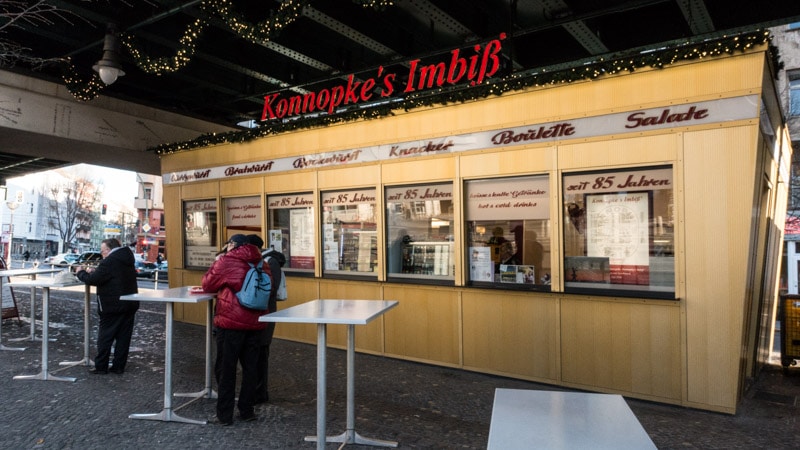
    • Imbißstände are small stands throughout Germany that offer small snacks and light meals. Traditionally, they serve currywurst and other sausages, but there are increasingly more that are serving other foods. Konnopke’s Imbiß was started in 1930, and during the division of Germany, it became known as the best place to get currywurst in East Germany. Today, it remains popular in Berlin, as a result of its East German popularity, and there are many loyal customers. Konnopke’s Imbiß serves currywurst (and vegan sausage), and fries, as well as some other quick foods. In addition, the loyal customers and the long history of the Imbiß mean that local Berliners are also going to be there at the same time. This is a great time for my guests to interact with locals, as well as experience something that is so culturally significant in Berlin.
    • https://www.konnopke-imbiss.de/de
Image result for konnopkes imbiss
  • Brandenburg Gate (11:55 am – 12:30 pm)
    • The Brandenburg Gate is 22 minutes away from the Imbiß using the tram and the S-bahn.
    • The Gate is a historically significant feature in Berlin, built in the 18th century by Friedrich Wilhelm II. Today it is seen as a symbol of European peace, and it also forms the border of the street Unter den Linden, which is a tree-lined street that features several architecturally significant features such as the Reichstag and the Berlin State Opera. We would visit the Brandenburg Gate, and then start walking down Unter den Linden until we reach Humboldt University. The walk is about 13 minutes, but I anticipate it taking longer due to sightseeing. We would then visit the campus of Humboldt Uni. While I am studying with IES, I will also be taking some classes at Humboldt during my time in Berlin.
    • https://www.visitberlin.de/en/unter-den-linden
Image result for unter den linden
Unter den Linden facing the Brandenburg Gate
  • Mittagessen (Lunch) (12:45 pm – 1:45 pm)
    • Boulevard Friedrichstrasse is about a 12 minute walk from Humboldt Uni
    • Traditionally, lunch is the major meal in Germany. Children often come home from school to eat a large hot meal with their family. While this is becoming less common today, I think it is important that my guests still experience this tradition. Boulevard Friedrichstraße is a restaurant close to the Spree River that serves hot meals including traditional German potato, noodle, and meat dishes, as well as salads and vegetarian options. The menu is generally around 15€ for a main dish, which is somewhat more expensive than the other food options, but it is highly rated, and they provide a lot of food for the meal.
    • https://www.boulevard-friedrichstrasse.de/speisen/
Image result for boulevard friedrichstrasse
  • Museum Island ( 2:00 pm – 6:00 pm)
    • Bode Museum is about a 7 minute walk from the restaurant, but I have built in some time to travel.
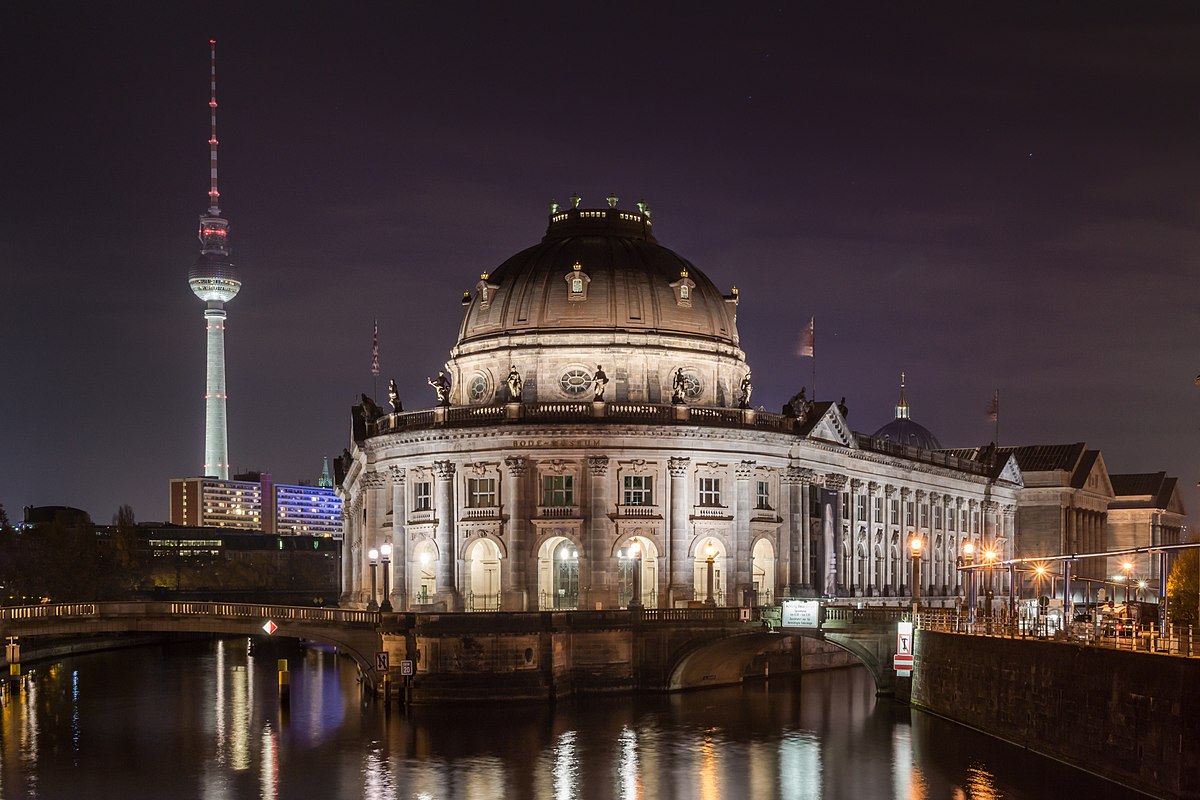
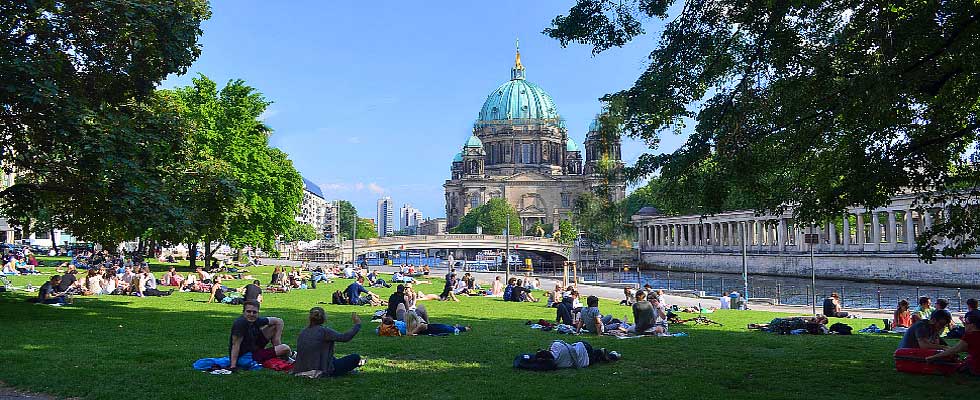
    • The Museum Island in Berlin is an island with five different museums: Pergamon Museum, which features art and history from the Middle East, Bode Museum, New Museum, Old National Gallery, and Old Museum. Visitors can get one ticket to access all five museums, and for students the tickets are 9€, and the regular tickets are 18€. I think this would be a good time for the group to explore the different museums, and to possibly break up into smaller groups to explore all five museums. On most days, the museums all close at 6:00 pm, so we would have time to explore the museums for a while before heading to dinner.
    • https://www.visitberlin.de/en/museum-island-in-berlin
Image result for museum island
  • Abendessen (Dinner) (6:15 pm – 6:45 pm)
    • Esra is an 8 minute walk from Bode Museum, so we would meet up there after all of the museums close at 6, and then walk together to Esra.
    • Like breakfast, dinner in Germany is also traditionally a smaller meal. While traditional German food is very important to an authentic German experience, I think that Middle Eastern food is also very popular in Berlin, and it plays a large role in the local cuisine. Esra is a Middle Eastern restaurant that is very close to Monbijou Park, and has many inexpensive light meal options for dinner, such as falafel, hummus, and shawarma.
    • https://www.lieferando.de/esra
    • https://www.tripadvisor.com/Restaurant_Review-g187323-d1343562-Reviews-Esra-Berlin.html
  • Monbijoupark (7:00 pm)
    • Monbijou Park is a public park that is open 24 hours a day. It is about a 5 minute walk from Esra. It has lots of green space for hanging out or playing games, as well as a balcony that overlooks the Spree River. I think it seems like a good place to unwind after a chaotic day of sightseeing, and to just hang out with each other.
    • The park is about a 6 minute walk from the hostel, so we would return there once we finished hanging out.
    • https://www.visitberlin.de/en/monbijoupark
Image result for monbijoupark

Works Cited

https://www.heartofgold-hostel.de/

https://berliner-mauer.mobi/touren.html?&L=1

https://www.konnopke-imbiss.de/de

https://www.visitberlin.de/en/unter-den-linden

https://www.boulevard-friedrichstrasse.de/speisen/

https://www.visitberlin.de/en/museum-island-in-berlin

https://www.lieferando.de/esra

https://www.tripadvisor.com/Restaurant_Review-g187323-d1343562-Reviews-Esra-Berlin.html

https://www.visitberlin.de/en/monbijoupark

Recommended Readings:

Stasiland by Anna Funder: a lot of the places we will visit deal with the history of East and West Germany in different ways, so I think reading this book will give an understanding of the history of East Germany

http://www.localhistories.org/berlin.html: this website gives an overview of Berlin’s entire history, which provides some context for the places we will be visiting

Week 5 / Woche 5

This week I was tasked with traveling around New Orleans by myself, while „unplugged“ from my phone. Initially, I was very nervous about this assignment. I have anxiety, and I couldn’t stop thinking about all of the things that could go wrong, especially since I wouldn’t be using my phone. However, I made sure to put a lot of effort into planning everything I did, which helped lessen my anxiety, and allowed me to have fun while traveling.

I am not a stranger to traveling by myself; I fly alone often, I’ve taken a train by myself, I’ve used the DC Metro by myself. This prior experience definitely helped me feel more comfortable with traveling alone, and I wasn’t particularly anxious about the alone aspect of this assignment. I was more concerned that I wouldn’t have a way to contact someone if something happened. When I started planning my trip, I decided to go to a somewhat familiar location, so I decided to take the streetcar to City Park. Like most Tulane students, I have taken the St. Charles Streetcar line many times, but this time I also planned to take the Canal line to City Park. While I’ve been to City Park a couple of times, my friends and I usually use Uber to get there, so I’ve never used public transportation, and I’ve never been there by myself before.

Before I left, I made sure to tell my friends where I was going, when I expected to be back on campus, and that I wouldn’t be using my phone while I was off of campus. I didn’t necessarily expect anything to happen, but my brain is most comfortable when I’ve prepared for the worst possible scenario, so that made me feel more comfortable. However, while I am in Berlin, I don’t think I would really travel unplugged very often. For one, IES requires that all of us have a German phone number so they can contact us at any time, which would be difficult if I didn’t have a phone with me while traveling. In addition, while I liked traveling alone, I definitely would’ve felt more comfortable if I had been able to contact someone.

However, while I had the chance to be unplugged, I decided to take advantage of it in multiple ways, once I got to City Park. I brought a bag with some food and my German readings for the week, and I got on the streetcar. I think starting the trip on a familiar public transportation line was helpful at easing my anxiety somewhat. Then, I transferred to the Canal line once we got to the Quarter. I was a bit more nervous for this part, because I haven’t traveled on that line before, and I was less familiar with that part of the city. In addition, after I had been on the streetcar for a bit, it was stopped, and everyone who wanted to go to City Park had to get on a bus instead. This was definitely a new experience for me, because I have not used the RTA buses at all.

Once I got off the bus at City Park, I decided to roam around a bit. Every time I’ve been with my friends, we’re always going for a specific reason, such as going to the botanical gardens, or to NOMA, and we don’t really explore that much. So I decided to walk around and find somewhere that I liked. After a bit, I ended up at the Woldenberg Lawn, where a lot of families were hanging out and playing games. Surrounding the lawn, there are a bunch of swing benches, so I decided to sit there for a bit. I ate lunch on the benches, and it was really nice (I have been trying to convince my friends to have a picnic in Audubon for about three semesters now, so I got a bit closer to that goal, too). After I ate, I took out my German readings. I decided to take advantage of being unplugged, and try to do my homework unplugged as well. Often, I make sure to have my dictionary app on-hand when I’m doing my readings, so that I can quickly look up any word. However, sometimes I think I rely too much on the app, and I knew that I’d have to be able to read in Germany without always being able to translate unfamiliar words immediately. It was surprisingly easy, which was comforting. I think I have a tendency to assume I don’t know a word, and look it up anyway, but when I couldn’t do that, I only had to mark a few words to look up later, and I was still able to understand most of my reading.

Once I finished my homework, I decided to walk around a bit more, because I still had some time. Then, I left City Park, got back on the bus to the Quarter, and the St. Charles streetcar. I really enjoyed my time in City Park, and I think it helped me be more confident in traveling alone, even if I wouldn’t necessarily travel alone unplugged again.

Week 4 / Woche 4

My mental map of the district of Mitte

For this week, my task was to develop a mental map of Berlin. I took places that I had already researched, and put them where I thought they belonged in relation to each other, without consulting an actual map. I think I did fairly well at placing the features in the correct location, because everything I put on the map was something I had already researched, so I would know either the closest place to eat or go shopping, or the places I most wanted to visit. As a result, I had been developing my mental map for a while.

An actual map of the main streets in Mitte, and the surrounding districts

I think it was useful to my mental map that the IES center where I will be studying is very central in Berlin. It is close to Friedrichstraße, which is a major street. In addition, Friedrichstraße intersects Unter den Linden, which is another major street. A lot of the places in Mitte are close to at least one of the streets, so that makes it easier for me to remember where places are located.

I think parts of this map are definitely tied to my identity. One of the first things I did after getting in to my study abroad program was to look up Catholic churches in Berlin. There is a Catholic cathedral in Berlin, St. Hedwig’s Cathedral, but they are actually doing renovations starting in September, and their masses were moved to a further location, so I looked for alternatives. Then, I found the Katholische Akademie, which is very close to the IES center. It also has masses in German and English. I thought this was useful to help me acclimate, because, while the Catholic mass is technically universal, I have read that church communities in Germany are very different from the US, so I would have a way to experience local culture, while also experiencing something I am already familiar with, and seeing the differences.

Another part of my identity that is reflected in my mental map is my love of music. I put the Berlin Staatsoper (National Opera) on my map, and I look forward to being able to see performances there, as well as exploring other venues around Berlin. In addition, I am already thinking about trying to participate in the Choir of Humboldt University. Humboldt Uni is the partner university of the IES center, and I will definitely be taking some classes there in the spring, as well as possibly some in the fall. I love singing, and I am involved in choir at Tulane, and I think that participating in the choir would be a good way to involve myself in something I’m already comfortable with, as well as experiencing German culture. Joining the choir would allow me to meet native Germans faster, which would definitely be difficult if I am only taking my classes with other IES students. In addition, it would also let me experience how music is taught and approached in Germany, which is really interesting to me, as a Music minor. I have already been looking on their website, and even wrote down where they practice, which I put on my map as well (Distlersaal).

One of the downsides to my map is that I don’t yet know where I’ll be living. I know I will be staying with a host family or a local student, but I don’t know where in Berlin I’ll be. As a result, when I started researching things like food and drug stores, I looked for places close to the IES center, that I could be aware of and utilize between my classes. One of the really cool things about being a university student in Berlin is that they have student unions in all the cities and regions, and all higher education students in those regions can benefit from this, regardless of what university they are attending. Part of this are the Mensen. A Mensa is basically like a cafeteria, and they have very inexpensive food options for uni students. I looked up the Mensen that were closest to the IES center, and they all happen to be affiliated with Humboldt, just because Humboldt is so close, but if I was in a different part of the city, or had some extra time to travel, I could use the same card to get food at any university in Berlin. Knowing my food options beforehand is really important to me, because I am a vegetarian, and I am also a very picky eater, so I have been keeping an eye on the menus to make sure that they have things that I can eat, and I don’t have to worry about that after I’m already in Berlin.

On my map, I marked some of the Strassenbahn (tram) and U-bahn (subway) stops that are closest to the IES center, but I am still not as familiar with the stops near other locations. Not many people drive cars in Germany, and there is no Uber, so the most popular forms of transportation are public transportation, like the S-bahn and the U-bahn, as well as biking. I mostly plan on using public transportation and walking, but I might try to learn to ride a bike this summer so I can use that to get around Berlin!

I think I am pretty familiar with the area around the IES center already, and I know where I can eat, and where the closest drug stores and pharmacies are, but I definitely can prepare more once I know where I will be living. I have to do more research on transportation from where I’ll live to the IES center, as well as grocery stores and drug stores that are closer to where I will live. However, Mitte is basically where all of the tourist attractions in Berlin are, so I am already familiar with some of the main attractions, the the Brandenburg Gate and Museum Island, that I will want to explore. I think I also need to do more research on the other districts, to make sure that I don’t stay in a bubble in Mitte, but explore the whole city.

Week 3 / Woche 3

Through my involvement with the German department, I have had the chance to meet many professors with experiences living in Germany. For this week, I had the chance to interview Rahel, who is a German university student currently doing an internship with Tulane’s German department.

It was very interesting to hear from someone who is around my age, and learn about her experiences growing up and being a student in Germany. However, while I think a lot of what she told me will help me better relate to local students in Berlin, Rahel is not from Berlin, so her experiences are more about the general experiences of being a young person in Germany. In fact, she is from a small town in Northwestern Germany, which she said is about an 8 hour drive from Berlin, so she has only been to Berlin twice. Currently she is a student in Cologne, which is in Western Germany. While she did not have much experience with Berlin, we talked about general German experiences, as well as about what she enjoys doing in Cologne, which she recommends I visit during my year abroad.

The largest difference Rahel has experienced during her time in New Orleans is the differing school systems. In Germany, there are three different tracks of high schools for students, while pretty much all high schools in the US are comprehensive schools. As a result, she says that people do not have a strong school identity, and clubs and sport teams are based on the town, rather than the school, so that all children can participate, rather than being separated by school. She said this continues in the universities. There are not dorms at most German universities, so most students live off campus, in apartments. According to Rahel, this means that German university students are more independent, because they have their own housing. Another factor that she said increases independence is that there is no homework in German universities, but students are just expected to learn independently. In addition, I thought it was interesting that there isn’t a rank of universities in Germany. Instead, German students pick their university based on the subject they want to study, as well as the city they want to live in. As a result, this means that German students apply to study a specific program, and they have to have the grades to be admitted to that course of study, not just the university. Further, German universities are much less expensive than universities in the US. All public universities in Germany have free tuition. However, students do still have to pay a „social fee“ each semester. However, Rahel says that at her university, the fee is about 260€ (approx. $290) per semester, and includes a pass to use all public transportation within the state, as well as paying for student sports and activities.

In addition to speaking with Rahel about university life, I also spoke with her about political and social differences in the US. She says that youth culture in Germany is very similar, because German children grow up watching American TV and listening to American music. In addition, she started learning English in 3rd grade, and says that German children now start learning English in Kindergarten (preschool). As a result, many Germans are very good at speaking English. In addition, she says that among German teens, it is common to use slang from other languages, such as English, Arabic, Russian, and Italian, even when speaking or texting in German, because these languages are spoken so widely in Germany.

One major social difference Rahel has experienced in the US is American attitudes towards nationalism. Nationalism is not common in Germany, and it is more common to identify with your state or region than with a unified German identity. Germany was only unified just over a century ago, and it has changed a lot, even in that time, so there is not necessarily one common German identity. For example, Rahel said that her „great-grandparents were born under an Emperor, [her] grandparents lived under Hitler, [her] parents were born in West Germany, and [she] was born in today’s Germany.“ With so many regime changes and conflicts, it is difficult to find a unified national identity. However, she has noticed in the US that Americans identify very strongly with their national identity, as well as with American politics.

Another difference she has noticed is the way race is treated. In Germany, it is illegal to ask for someone to identify their race in a job application, in order to prevent discrimination, and she was very confused when she first came to the US and had to identify her race at the doctor, and when applying for jobs. In addition, racial categories are different in Europe, so she wasn’t even sure how to define her race at first. She also compared American attitudes towards the history of slavery to German attitudes towards the Holocaust. She said that, in German schools it is mandatory to learn about the Holocaust, and to visit concentration camps and memorials. Germans are not proud of this part of their history, so they try to avoid anti-Semitism, and to make sure that young Germans do not forget the Holocaust. In comparison, in the US, slavery is not as emphasized, and students do not have to visit plantations to learn about it. She thinks it is important to teach younger generations about the Holocaust, because as the generation that was alive during it is dying off, there is also a rise in far-right attitudes in Europe.

Veering away from politics, Rahel and I also discussed places she likes to hang out as a student. She spoke about her experiences in Cologne, but recommended I find similar places in Berlin. For example, she said one of her favorite places in Cologne is the Poller Wiesen. This is a park on the Rhine River, and she says it is similar to the Fly, except larger. While I may not get the chance to spend time in Cologne, I do look forward to checking out the parks in Berlin. Her last piece of advice was to find a local coffee shop in Berlin. She said that would allow me to meet German students, as well as being a nice place to hang out.

Week 2 / Woche 2

This week, I’ll be focusing on reading I can do to prepare myself for living in Germany. I tried to find books and newspapers that showed a variety of different perspectives, so that I don’t find myself developing a stereotype, or a „single story“ of what it means to be German.

Newspapers

Berliner Zeitung (english: Berlin Newspaper)

This newspaper is a daily newspaper that was founded in the DDR (East Germany) in 1945. Despite its East German origins, today the paper hires journalists from both eastern and western Germany, and markets itself as a newspaper for all of Germany. It tends to lean slightly left politically, as a result of its East German history.

Der Tagesspiegel (english: The Daily Mirror)

This newspaper is also a daily newspaper published in Berlin, however, it was founded in 1945 in the BRD (West Germany). Today, it is still more popular in western Berlin, than in the East. The newspaper markets itself as producing news for Berlin and all of Germany, and is one of the most popular Berlin newspapers.

https://leute.tagesspiegel.de/mitte/intro/2019/03/27/76116/

This article discusses a Theater that is in a park in the Berlin district of Mitte, which is the district I will be studying in. The Theater in Monbijoupark is an amphitheatre that was first built in 1999. Because of zoning laws, the theater director has to apply for an exemption from the city every year to build the theater, and it must be taken down and rebuilt every summer. However, there is conflict between Humboldt University and the Theater about who can build in that location. I thought this was interesting, because it is fascinating to see how arts and entertainment are treated in other places. In Berlin, the city wants the theater to persevere, while that wouldn’t necessarily be the case in the US.

https://www.tagesspiegel.de/politik/mueller-bericht-entlastet-trump-die-demokraten-stehen-vor-einem-debakel/24141600.html

This article discusses the Mueller Report from a German perspective. I thought it was interesting to read, because in the US, this is a story that we are constantly hearing, and it is difficult to develop your own opinions. However, this perspective is from an outsider, so it is less influenced by how Americans feel about the US. While I might not agree with the author’s perspective, I think this article helps me to avoid developing a „single story“ about US politics, even though I live in the US.

Fiction

The Wall Jumper: a Berlin Story by Peter Schneider

Written in 1982 (7 years before the fall of the Berlin Wall), by a West German author, The Wall Jumper tells various stories about people who have illegally crossed between East and West Berlin. It describes the differences in the sides of the divided city, as well as discussing some reasons some people wanted to go from East to West, or from West to East.

Happy Birthday, Turk! by Jakob Arjouni

Written in 1985, this book was written by a Turkish-German author, and features a Turkish-German detective. The first novel in a series of crime novels, this book follows the detective as he tries to solve the murder of a Turkish worker, despite the resistance of the German police. While this series takes place in Frankfurt, and not Berlin, I think it will still provide an interesting perspective of the experiences of Turkish immigrants in Germany.

Non-Fiction

In the Garden of the Beast by Erik Larson

Written in 2011 by an American author, this book tells the story of William Dodd, who was the American Ambassador to Germany during Hitler’s rise to power. In particular, it focuses on the responses Americans had to the Nazi regime. When he initially went to Germany, Dodd held anti-Semitic views, and he and his family initially were supportive of the regime. However, Larson discusses how Dodd began to trust the regime less, and protested against it. I think this is interesting, because it shows how people outside of Germany were experiencing Hitler’s rise to power.

Stasiland by Anna Funder

Written in 2003 by an Australian author, this book is based on interviews with people who lived in East Germany. Funder interviewed people who resisted the East German regime, as well as people who worked for the Stasi (the East German secret police). It details all of their experiences under the regime, as well as how they feel about their actions after the reunification of Germany. In Germany, there is often a perception that the DDR was evil, and the BRD was perfect, but this book talks about people who both supported and opposed the DDR, and I think it is important to see both sides.

Other Books

Emil und die Detektive (english: Emil and the Detectives) by Erich Kästner

Written in 1929, this book is a children’s book set in Berlin. It tells the story of a boy named Emil, who lives in the country, and is visiting his relatives in Berlin. While on the train, a man steals his money, and Emil and a group of other children go on an adventure around Berlin and eventually catch the thief. Kästner is one of the most popular children’s authors in Germany (his book Die doppelte Lottchen was the basis for The Parent Trap), and so this is a book that a lot of Germans read in their childhood. In addition, while the Berlin Emil visits is very different from the Berlin I will live in, I think the story of coming to Berlin by yourself for the first time will still be relatable for my experiences.

Der geteilte Himmel (english: Divided Heaven) by Christa Wolf

Written in 1963 by an East German author, this book is about conflict and issues in East Germany in the early 1960s. It is about a romance between the characters of Rita and Manfred. However, Manfred moves to West Germany, and Rita tries to convince him to come back to the East. At the end, Rita returns to the East without Manfred, and the the Wall is built, permanently dividing East and West. I think this book will be interesting because it describes the tensions building between the divided Germanys, as well as the downsides of both East and West. Today, a lot of Germans feel nostalgic about either the East or the West, and it is easier to overlook the negative aspects.